
Szene aus Vestida de azul (1983)


Szenendetails
| Dauer: 494 Sek.. | Nacktheit: yes | Ersteller: zorg |
| Neue Dateigröße: Loading... | Ton: yes | Alte Dateigröße: 418 mb |
| Dateiformat: AOMedia Video 1 (WebM/AV1) | Auflösung: 1440x1080 | Hinzugefügt: 2026-01-05 |
Darstellerinnen in dieser Szene

Geburtsname: Francisco Pérez de los Cobos Ávila
Geburtsdatum: 1951-09-09
Geburtsort: Hellín, Albacete, Spain
Details
Alternative Namen: Eva Pérez, Eva La Gata, Francisco Perez de los Cobos Avila, Francisco Pérez, Francisco Pérez C.
Körperliche Merkmale: N/A
Vollständige Biografie
Francisco Pérez Cobos, publicly known by the stage name Eva Pérez, is a Spanish performer and cultural figure who rose to prominence as one of the six protagonists in the seminal 1983 documentary "Vestida de azul" (Dressed in Blue). Directed by Antonio Giménez-Rico, the film was a landmark of the Spanish transition to democracy, offering an unprecedented and humanizing look into the lives of transgender women in Madrid at a time when they faced extreme marginalization and legal repression.
In the film, Pérez Cobos appears as herself, sharing intimate details of her daily life, her experiences with hormone treatments, and the challenges of plying her trade as a sex worker along Madrid’s Calle de Jorge Manrique. Alongside her fellow cast members—Loren, Nacha, Renée, Josette, and Tamara—she helped break ground for LGBTQ+ representation in Spanish cinema, influencing later filmmakers such as Pedro Almodóvar.
Decades later, her legacy remains central to Spanish queer history. Her life and those of her peers were further immortalized in the 2019 book Vestidas de azul by Valeria Vegas, which served as the basis for a 2023 Atresplayer television series of the same name. As of 2026, the original 1983 documentary continues to be celebrated internationally, with high-profile screenings at festivals like the Berlinale 2025, ensuring that the pioneering contributions of Francisco Pérez Cobos to transgender visibility remain a vital part of the cultural conversation.

Details
Alternative Namen: Nacha María Sánchez, Jose A. Sanchez, Jose Antonio Sanchez Sanchez, Nacha La Poderosa
Körperliche Merkmale: N/A
Karriere
Erste Auftritte:
Wichtigste Rollen:
Karriere-Highlights:
Vollständige Biografie
Nacha María Sánchez (born August 11, 1962, as José Antonio Sánchez) is a Spanish actress and trans activist who became a pioneer for trans visibility in Spain. Born in Madrid, she grew up in the Embajadores neighborhood but left home at the age of 13 due to her gender identity. She rose to national prominence as one of the six protagonists in the landmark 1983 documentary "Vestida de azul" (Dressed in Blue), directed by Antonio Giménez-Rico. In the film, she shared her personal journey of transition and the harsh realities of life for trans women during Spain's transition to democracy.
After decades away from the mainstream spotlight, her legacy was revitalized by the 2023 Atresplayer series "Vestidas de azul". In this sequel to the hit series Veneno, Nacha returned to the screen to portray the present-day version of herself, while actress Penélope Guerrero played her younger self in historical recreations.
In 2025, her historical importance was further recognized with the 4K restoration and theatrical re-release of the original documentary at prestigious festivals such as the Berlinale and the San Sebastián International Film Festival. Today, Nacha remains one of the few survivors of the original group, serving as a vital link between the early days of trans activism and the modern era of LGBTQ+ rights in Spain.

Details
Alternative Namen: Josette, Jose Ruiz Orejon Casado, José Ruíz-Orejón Casado 'Josette'
Körperliche Merkmale: N/A
Vollständige Biografie
José Ruiz Orejón is an emerging Spanish actress who has captured international attention through her poignant and authentic performances on screen. She rose to prominence with her breakout role in the critically acclaimed series "Vestida de azul" (2023), produced by Atresmedia and Suma Content (the production company of Javier Ambrossi and Javier Calvo).
In the series, which serves as a spiritual successor to the hit show "Veneno," Ruiz Orejón portrays a vital character inspired by the real-life experiences of trans women in post-Francoist Spain. Her work is celebrated for its emotional depth and its contribution to reclaiming the forgotten history of the LGBTQ+ community during Spain’s transition to democracy. As a performer, José Ruiz Orejón represents a new generation of Spanish talent dedicated to inclusive storytelling, using her platform to provide visibility and a voice to marginalized narratives with both grace and artistic power.

Details
Alternative Namen: Juani Ruiz, Juan Munoz Santiago
Körperliche Merkmale: N/A
Vollständige Biografie
Juani Ruiz, often recognized by her birth name Juan Muñoz Santiago, is a prominent Spanish actress and singer whose journey reflects the evolving landscape of transgender visibility in Spain. Born in June 1962 in Badolatosa, Seville, Ruiz faced significant challenges early in life due to her gender identity, eventually moving to Madrid where she navigated a society that offered little protection to the LGBTQ+ community. Her early years were marked by hardship, including periods of survival through sex work, a reality shared by many trans women of her generation.
Her entry into the public eye began in 1983 as one of the protagonists of Antonio Giménez-Rico’s landmark documentary, Vestida de azul (Dressed in Blue). The film was a pioneering work in Spanish cinema, offering a raw and humanizing look at the lives of six trans women during the transition to democracy. Following this early exposure, Ruiz pursued formal acting training at the "La Lavandería" school in 2000 to overcome personal fears and build her self-esteem.
Ruiz experienced a major career resurgence in 2020 when she was cast as herself in the critically acclaimed series Veneno, created by Javier Calvo and Javier Ambrossi. The show, which chronicled the life of her friend Cristina Ortiz, catapulted Juani into the spotlight, showcasing her charismatic personality and deep-rooted history within the community. She continued her collaboration with the creators in the series Cardo—where she notably played a cisgender character—and returned to her roots in the 2023 series Vestidas de azul, a narrative continuation that honors the memory of the women from the original 1983 documentary.
In addition to her acting, Ruiz fulfilled a lifelong dream by launching a musical career, releasing singles such as "Fantasmas del pasado" in 2023 and "Ahora viene lo mejor" in 2024. Today, she stands as a symbol of "trans memory," a woman of fulfilled dreams whose persistence has made her an essential figure in Spanish contemporary culture.

Details
Alternative Namen: Loren Arana, Lorenzo Arana Orellano
Körperliche Merkmale: N/A
Vollständige Biografie
Loren Arana Arellano (1938–2002) was a pioneering Spanish transgender activist and performer who became a vital symbol of trans visibility during Spain’s transition to democracy. Born in Trebujena (Cádiz), she moved to Madrid in the 1970s to live authentically, navigating a society that offered little protection to LGTBIQ+ individuals.
She achieved national prominence as one of the six protagonists in Antonio Giménez-Rico’s landmark 1983 documentary, Vestida de azul. Through her participation, she provided a raw and courageous look at the realities of trans women in the post-Franco era, discussing her life as a sex worker and the systemic discrimination she faced.
After years of activism and life in the capital, she returned to her hometown of Trebujena in 1996, where she passed away in 2002 at the age of 63. Her legacy has seen a significant resurgence in the 2020s, particularly following the 2023 Atresplayer series Vestidas de azul, where her life story was dramatized for a new generation. In 2019, her hometown honored her memory by installing a commemorative plaque at her former residence, recognizing her as a fearless advocate for human rights and identity.

Details
Alternative Namen: Rene Amor Fernandez
Körperliche Merkmale: N/A
Vollständige Biografie
René Amor Fernández was a pioneering figure in the Spanish LGBTQ+ movement and a central protagonist in the landmark 1983 documentary "Vestida de Azul" (Dressed in Blue). Directed by Antonio Giménez-Rico, the film was the first of its kind in Spain to provide a raw and honest look at the lives of transgender women during the country's transition to democracy.
Working as a hairdresser in Madrid, René Amor became an accidental icon by sharing her daily life, her struggles with social marginalization, and her personal journey of identity on screen. She was one of six women whose courage helped bring trans visibility out of the shadows of the Franco era.
In the years following the film, René Amor largely withdrew from the public eye. Tragically, she passed away before she could witness the modern resurgence of her legacy. Her life and spirit were recently honored in the 2023 scripted series "Vestidas de Azul" (a sequel to the hit series Veneno), where her story was brought to a new generation. In the series, she is portrayed by actress Rossa Ceballos, serving as a poignant tribute to a woman who lived her truth at a time when doing so was a profound act of resistance.
Über den Film: Vestida de azul (1983)
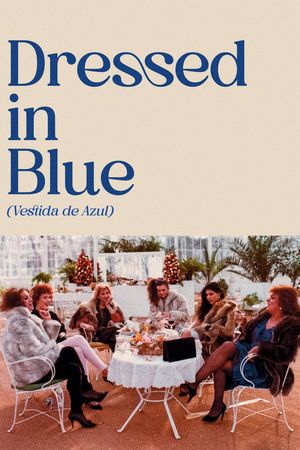
Alternativer Titel: Dressed in Blue, Ubrana na niebiesko, Одетый в синий
Regisseur: Antonio Giménez Rico, Antonio Giménez-Rico
Drehbuchautor: Antonio Giménez Rico, Antonio Giménez-Rico
Produktion & Genre
Produzent(en): Producer: Monica Del Bosco-Loew, Bernardo Fernández, Baltasar Sanrigoberto
Firmen: Serva Films
Genre: Documentary, Drama
Auszeichnungen & Ähnliche
Auszeichnungen:
Ähnliche:
Schlagwörter
Schlagwörter: lgbt
Geschichte
Vestida de azul, released in 1983, follows six transgender women navigating life in post-Franco Spain. The documentary provides an intimate glimpse into their daily lives as they work the Madrid streets as prostitutes. Each woman shares her personal experiences and history, revealing the challenges and realities of being a transgender woman during this time.
Zusammenfassung
Vestida de azul is a poignant Spanish documentary directed by Antonio Giménez Rico. Set in post-Franco era Madrid, it explores the lives of six transgender women, offering a rare and candid insight into their struggles and triumphs. The film is notable for its unflinching portrayal of societal challenges faced by the LGBTQ+ community during this period. It serves as a historical record of Spain's evolving social landscape and a testament to the resilience of its marginalized communities.